

Your $15 plastic board is likely the most underperforming employee on your payroll right now. Most Aussie tradies treat corflute signs as a simple checkbox item rather than a high-performance lead generation engine. You’ve likely dealt with signs that fade after three weeks in the Queensland sun or snap during a standard afternoon southerly. It’s frustrating to watch your branding look cheap while bigger companies use their site presence to snap up every local inquiry before you’ve even finished the rough-in.
We agree that a sign shouldn’t just sit there; it should work as hard as you do. This guide shows you how to turn affordable corrugated plastic into a professional marketing tool that stands up to the 2026 climate and captures passive leads while you’re busy on the tools. You’ll learn how to build a durable site presence that outlasts your current project and stays crisp for at least 24 months of heavy use.
We’ll break down the latest UV-resistant printing tech, the layout secrets that stop foot traffic, and the exact strategy to use your signs as a physical bridge to your TradieLink profile and digital ecosystem.
Key Takeaways
- Learn how to select the right board thickness for your specific jobsite to prevent signs from snapping or blowing away in high winds.
- Understand why corflute signs remain the most cost-effective choice for high-turnover residential and commercial projects compared to heavy metal alternatives.
- Apply the 3-second design rule to ensure your business name and services are legible to drivers passing by at speed.
- Turn physical signage into a digital lead generator by connecting your boards directly to your online gallery and contact details.
- Discover the information hierarchy that stops passersby from ignoring your brand and starts conversations with potential clients.
What are Corflute Signs? The Aussie Tradie’s Jobsite Essential
Walk onto any construction site from the Gold Coast to Geelong and you will see them. They are the bright, lightweight boards cable-tied to temporary fencing or screwed into site hoarding. These corflute signs are the industry standard for a reason. They represent the most efficient way to mark your territory and protect your brand without the heavy investment of permanent metal signage. For a trade business looking to scale in 2026, these boards are the first point of contact between your craft and a potential client walking past the fence line.
Technically speaking, Corrugated plastic (corflute) is a fluted plastic material that offers high impact resistance at a fraction of the weight of metal. It consists of two flat sheets of polypropylene with a “fluted” or ribbed center. This structure creates a board that is incredibly rigid for its weight, making it easy for a single worker to install a dozen signs before the morning smoko. Every trade, from residential painters to commercial tier-one contractors, relies on this material because it handles the daily abuse of a high-traffic jobsite while keeping costs low.
Why Corrugated Plastic is the Industry Standard
Polypropylene is a rugged thermoplastic that doesn’t care about the weather. Unlike plywood, it won’t rot or delaminate when a storm hits. Unlike steel, it won’t rust or require heavy-duty mounting brackets. The internal flutes provide a high weight-to-strength ratio, which is critical when you’re loading a ute. You can stack 50 of these boards in the back of a van and still have plenty of room for your tools and materials. In the 40-degree heat of an Australian summer, high-quality UV-stabilized boards maintain their shape and color, ensuring your business doesn’t look like a budget operation after three weeks on-site.
Common Use Cases Across Different Trades
Versatility is why these boards dominate the market. For most tradies, use cases fall into three main buckets. First is compliance. Safe Work Australia guidelines often require specific safety and PPE signage to be visible at the entry point of every site. Second is the “Work in Progress” marketing board. This is your silent salesman that tells the neighbors who is doing the high-quality renovation next door. Finally, directional signage is essential for larger commercial projects. Plumbers, sparkies, and landscapers use them to direct deliveries or mark specific zones, reducing site confusion and improving overall workflow efficiency.
Choosing the Right Specs: 3mm vs. 5mm and Longevity
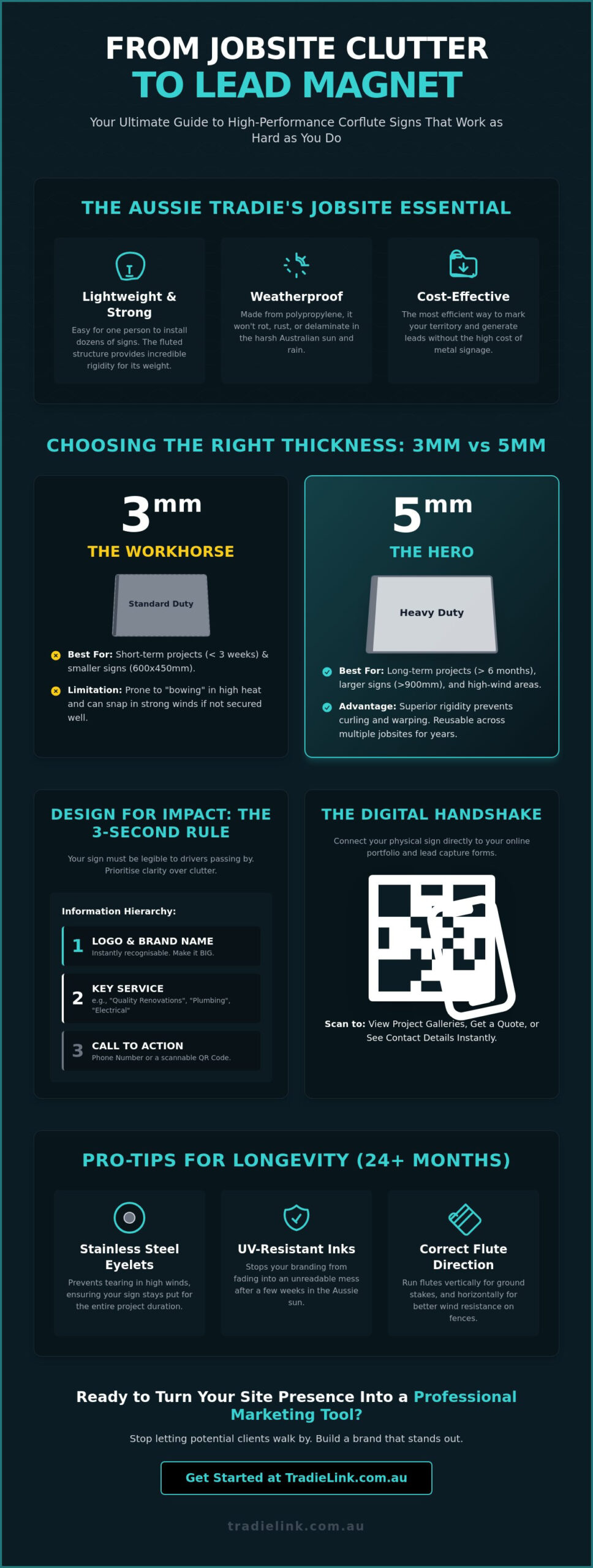
Choosing the wrong board thickness is a rookie mistake that leads to “bowing” and failed marketing. Most corflute signs come in two standard thicknesses: 3mm and 5mm. While the 3mm option is the workhorse of the industry, it’s designed for specific conditions. If you’re hanging a standard 600x450mm sign on a chain-link fence for a three-week residential renovation, 3mm is perfect. It usually sits around 600 to 900 GSM (grams per square metre), providing enough flex to handle minor bumps without snapping.
Step up to a 5mm board when your project duration exceeds six months or your sign exceeds 900x1200mm in size. Thicker boards offer significantly more rigidity, which prevents the sign from curling at the edges under high-heat conditions. This is particularly important for commercial site hoarding where a warped sign makes your business look disorganized. The direction of the “fluting” inside the board also dictates its strength. If you’re using ground stakes, ensure the flutes run vertically so the stakes can slide inside. For fence mounting, horizontal flutes provide better resistance against the wind pulling the sign off its ties.
Thickness and Durability: Finding the Sweet Spot
Longevity depends on more than just thickness. You need to consider the finishing. Always opt for stainless steel eyelets in the corners. Without them, the plastic will eventually tear out under wind pressure; this leaves your branding face-down in the mud. According to EPA guidelines on signage materials, choosing durable, high-quality plastics ensures a longer lifecycle and reduces site waste. Investing in 5mm boards for your “Hero” signs ensures they can be moved from project to project for years, rather than being a single-use expense.
Weatherproofing for the Australian Climate
The Australian sun is the biggest threat to your signage. Standard inks will bleach into an unreadable mess within 90 days if they aren’t UV-stabilised. Insist on high-quality UV-cured inks that bond directly to the polypropylene. This prevents the “cracking” effect seen on cheap, laminated alternatives. UV-stabilised corflute can last up to 2 years outdoors if properly maintained. When the sun hits 40 degrees in January, cheap plastic becomes brittle and shatters like glass. High-spec boards remain flexible, absorbing the impact of wind and debris. Once you’ve secured your site with durable signage, you can focus on managing the influx of inquiries through your TradieLink profile, ensuring no local lead goes unanswered.
Corflute vs. Metal and PVC: Which Signage Wins?
Choosing the right material is about matching the tool to the task. While a heavy-duty Colorbond or aluminium composite panel looks impressive, it’s often overkill for a six-week residential build. Corflute signs dominate the trade industry because they offer the highest return on investment for high-turnover projects. If a sign costs a fraction of a metal alternative and generates the same number of phone calls, your profit margin on that lead is immediately higher. You aren’t just buying plastic; you’re buying the most cost-effective way to get your brand in front of the local neighborhood.
Portability is the second major win for corrugated plastic. You can easily fit 20 or 30 signs in the back of a ute or van without worrying about weight limits or scratching your expensive tools. Try doing that with 20 sheets of Alupanel or heavy steel. The lightweight nature of these boards means you can move them between sites in seconds. If you’re looking for a deeper dive into how different materials impact your brand, check out our comprehensive signage guide for more strategy on winning local work.
Short-Term vs. Permanent Signage
Context is everything. Use corflute for “active” jobsites where you move every 2 to 4 weeks. It is the perfect medium for “Work in Progress” boards. However, you should upgrade to aluminium composite (Alupanel) for your permanent warehouse or office branding. Metal handles long-term exposure better over five or ten years. For high-end indoor displays or trade show booths, PVC foam boards (Sintra) provide a smoother, more premium finish without the visible “ribs” of corrugated plastic. Use the right material for the specific environment to maintain a professional image.
Ease of Installation on Site
Installation shouldn’t take all morning. Most tradies use heavy-duty cable ties to secure boards to temporary fencing or scaffolding. If you’re a landscaper or plumber working on a new subdivision, “H-stakes” allow you to push signs directly into the turf in seconds. Screwing them into timber hoarding is just as simple. There is also a major “throwaway” factor to consider. If a bobcat accidentally clips a metal sign, you’ve lost a significant investment. If it clips one of your corflute signs, you just swap it for a fresh one from the back of the ute. To keep your signs reusable, store them flat in a cool area; stacking them on their side can cause the plastic to warp over time. For contractors who need a secure, weather-protected space to keep their gear and signage in top shape, Atlanta Container & Trailer offers the reliable storage solutions required for busy jobsites.
Design and Placement: Turning a Plastic Board into a Lead Machine
A sign is only as good as its legibility. If a driver cruising at 60km/h cannot digest your message in under three seconds, your investment is wasted. Most corflute signs fail because they try to say too much. You don’t need to list every service you offer. You need to establish authority and provide a clear way to get in touch. Your information hierarchy should always follow a strict order: your logo for brand recognition, your primary service for immediate relevance, and your contact details for the lead. While you’re branding the site, don’t forget your tools; check out our custom stickers guide to keep your gear looking just as professional as your jobsite.
Colour psychology plays a massive role in how your business is perceived. Construction sites are naturally chaotic environments. High-visibility colours like safety orange, bold blue, and yellow work best because they signal authority and “work in progress” to the human brain. These colours cut through the visual clutter of a suburban street or a busy commercial zone. Use high-contrast combinations, such as white text on a dark blue background or black text on yellow, to ensure your phone number is readable even in low-light conditions at the end of a winter workday.
High-Visibility Design Principles for Tradies
Contrast is your best friend. Avoid “fancy” script fonts that look like a wedding invitation. Stick to bold, sans-serif typefaces that stand out against the visual noise of a busy street. Use action verbs to define your value quickly. Instead of just writing “Plumbing,” use “Blocked Drain Specialist” or “24/7 Emergency Plumber.” This tells the prospect exactly what problem you solve before they’ve even finished driving past the fence. Keep your message punchy. You want to be the obvious choice for a neighbour who has been putting off a repair for months.
Strategic Placement: Where to Hang Your Signs
Placement is about visibility and legality. Eye-level mounting on temporary fencing is the gold standard for foot traffic and slow-moving cars. If you’re working in a new estate with high grass, use lawn stakes to keep your message above the weeds. Leverage the “Neighbourhood Effect” by placing corflute signs on street corners leading toward your active jobsite. This creates the illusion of a massive local presence. Always check your local council rules, as some areas in New South Wales and Victoria have strict $500 plus fines for “illegal dumping” of signs on public nature strips. Your corflute boards are just one piece of a broader local marketing strategy; pairing them with face-to-face opportunities by learning how to market your trade business at local events in Australia can dramatically multiply your neighbourhood presence. Once your physical branding is locked in, build your professional online profile today to ensure those offline leads have a seamless place to land.
The Digital Handshake: Connecting Physical Signs to Your Online Profile
In 2026, a phone number on a board is often a barrier rather than a bridge. Modern customers are “silent leads” who prefer to vet your work from their car or the sidewalk without the pressure of a phone conversation. If your corflute signs only offer a mobile number, you’re missing out on the 65% of consumers who want to see social proof before they even think about requesting a quote. By adding a digital entry point, you turn a passive plastic board into an active lead capture system that works while you’re busy on the tools. This integration is a core part of building a professional trade business, as detailed in our Tradies Australia pillar.
Building instant trust is the goal of every jobsite marketing strategy. When a prospect sees your sign, they want to know if you’re the real deal. Linking your physical signage to your verified reviews and project history provides that immediate validation. It moves the relationship from a random sign on a fence to a trusted professional with a track record of success in the local area.
Using QR Codes to Bridge the Gap
QR codes are the most efficient way to move a prospect from the physical world to your digital doorstep. For maximum scanability on jobsite signage, ensure the code is at least 5x5cm. This size allows a modern smartphone to pick up the link from several metres away. We recommend using dynamic QR codes rather than static ones. A dynamic code allows you to change the destination URL without reprinting your entire batch of signs. If you finish a project and want to redirect traffic to a new gallery of work, you can do it in seconds from your phone. This also allows for precise tracking; you can see exactly which street corner or jobsite is driving the most traffic to your business.
Linking Signs to Your TradieLink Profile
Your digital handshake needs to lead somewhere professional. Sending traffic to a generic social media page or a cluttered homepage often results in a bounce. Instead, link your corflute signs directly to your TradieLink profile. This provides a seamless, mobile-optimised experience where prospects can immediately see your verified reviews, gallery of past projects, and valid insurance details. It effectively acts as a 24/7 digital foreman. You can even link the sign to your NFC digital business card data, allowing a potential client to save your contact details with a single tap. This level of connectivity separates the elite operators from the blokes just getting by. To take your business to the next level, optimise your tradie business with a TradieLink profile today and make sure every sign you hang is a high-performance lead generator.
Dominate Your Local Jobsite in 2026
Effective marketing on the tools doesn’t require a massive corporate budget. It starts with choosing the right specs for your corflute signs and ensuring your design stops traffic. By upgrading to 5mm boards for long-term sites and integrating QR codes, you move beyond simple signage and into a high-performance lead generation system. These boards aren’t just plastic; they’re the physical entry point to your digital reputation. You’ve already seen how the right placement and a clear information hierarchy can turn a suburban fence into a silent salesman.
We’ve helped thousands of Aussie tradies turn their site presence into a professional growth engine. Don’t let your hard work go unnoticed because of a faded board or a missing contact link. Our platform is specialised for local lead generation and integrates seamlessly with digital business card technology to ensure you never miss a quoting opportunity. Take control of your site marketing and build your professional TradieLink profile and win more local jobs today. It’s time to let your jobsite do the heavy lifting while you focus on the craft.
Frequently Asked Questions
How long do corflute signs last outdoors in Australia?
In the harsh Australian climate, high-quality UV-stabilised boards typically last between 12 and 24 months before showing significant signs of fading or brittleness. Signs placed in direct, all-day sun in Northern Queensland may see a 20% faster degradation rate compared to those in shaded or southern locations like Melbourne. Proper mounting prevents physical damage from wind, which is often what ends a sign’s life before the sun does.
Are corflute signs recyclable?
Yes, corflute signs are made from polypropylene, which is a Grade 5 recyclable plastic. Many local councils and specialist recycling centres accept these boards for processing into new plastic products like garden furniture or composite decking. You must remove any metal eyelets or adhesive vinyl stickers before dropping them off to ensure the plastic remains uncontaminated. This helps reduce the 30% of site waste often attributed to temporary materials.
Can I print on both sides of a corflute sign?
Double-sided printing is a standard option and is highly recommended for signs placed perpendicular to a road. This effectively doubles your brand exposure to traffic moving in both directions for a small additional production cost. It is particularly useful for A-frames or signs mounted on corner fence posts where visibility from multiple angles is critical for capturing local leads. Ensure your design remains consistent on both sides to maintain professional brand recognition.
Do corflute signs come with eyelets automatically?
Eyelets are typically an optional extra rather than a default feature. Most trade-focused printers offer stainless steel or brass eyelets in the four corners to prevent the plastic from tearing under wind load. If you’re planning to use cable ties on a chain-link fence, these are essential. In a 2025 survey of site signage failures, 45% were caused by “pull-through” where zip ties ripped through the plastic because eyelets weren’t installed.
What is the best way to clean a dirty corflute sign?
Use warm, soapy water and a soft microfibre cloth to remove site dust and mud. Avoid using solvent-based cleaners or abrasive scouring pads, as these can strip the UV-protective coating or scratch the printed ink. If you encounter stubborn adhesive residue from old tape, a small amount of isopropyl alcohol usually works without damaging the polypropylene. Regular cleaning every 3 months keeps your branding looking sharp and professional to potential clients.
Is there a minimum order quantity for custom corflute signs?
Most digital printers allow you to order a single custom sign, though the unit price drops significantly when you order in batches of 10 or more. For a growing trade business, ordering a starter pack of 20 corflute signs is usually the most cost-effective move. This ensures you have enough stock to cover multiple active jobsites and replace any boards that get damaged by site machinery or extreme weather events throughout the year.
Can I use corflute signs for permanent outdoor shopfronts?
Corflute is not recommended for permanent shopfront signage intended to last more than 24 months. While it is durable for temporary jobsites, it lacks the structural integrity and premium finish required for a fixed business location. For a permanent office or warehouse facade, aluminium composite panels (ACP) are the industry standard. These provide a perfectly flat surface and can withstand over 10 years of exposure without warping or losing their professional edge.
What size corflute sign is best for a residential fence?
The 600x450mm size is the most popular choice for residential fences because it fits perfectly between standard fence posts. This is the same format often used by residential property experts like SKREALTORS Real Estate to capture local attention. If the property has a large setback from the road, stepping up to a 900x600mm board ensures your phone number remains legible from a distance of 15 metres. Always measure the available space on the temporary fencing before ordering to ensure the sign doesn’t overlap with gate hinges or safety locks.