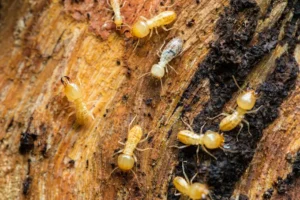

When winter rolls around in Southeast Queensland, most homeowners pack away the bug spray and stop thinking about pests. The cooler mornings, the jumpers, the shorter days — it all feels like nature is hitting pause. But while you’re winding down, termites aren’t returning the favour.
There’s a persistent myth that termites go dormant in winter. That they slow down, retreat, and become someone else’s problem until spring. In reality, the opposite is closer to the truth. In SE Qld’s subtropical climate — where winter temperatures rarely drop below 15°C — termite colonies remain active all year round. They don’t hibernate. They don’t take breaks. And they certainly don’t stop eating your home.
That distinction matters more than most people realise. Termites cause an estimated $1.5 billion in damage to Australian homes every year, and the vast majority of home insurance policies don’t cover it. When it comes to termites, what you don’t see in winter can cost you dearly by summer.
The Biology — Why Termites Don’t Hibernate
Termites are not like the pests you notice seasonally. Flies disappear in winter. Mosquitoes drop off. But termites operate on a completely different system. A termite colony maintains a core nest temperature between 25°C and 36°C regardless of what’s happening outside. The colony regulates its own climate, which means external temperature drops have far less impact on their behaviour than most homeowners assume.
What does change in winter is where they operate. When the ground and air cool down, subterranean termites — the type responsible for the vast majority of structural damage in Australia — move deeper. They retreat further into wall cavities, subfloor spaces, and underground tunnels where the temperature is more stable. They’re not slowing down. They’re just harder to find.
Southeast Queensland is home to Coptotermes acinaciformis, widely regarded as Australia’s most destructive termite species. This species thrives in subtropical conditions and remains active year-round across Brisbane, the Moreton Bay region, the Sunshine Coast, and surrounding areas. A mature Coptotermes colony can contain millions of workers, all feeding continuously on timber — regardless of the season.
The takeaway is straightforward: reduced visibility does not mean reduced activity. Just because you can’t see them doesn’t mean they’re not there.
Why Winter Is Actually More Dangerous, Not Less
Here’s where it gets counterintuitive. Winter isn’t a period of lower termite risk — it’s a period of lower homeowner vigilance. And that gap between ongoing termite activity and reduced human attention is exactly where the damage adds up.
During the cooler months, termites actively seek warmth. Your home — with its insulated wall cavities, heated rooms, hot water systems, and north-facing walls absorbing winter sun — becomes both a food source and a heat source. It’s the most attractive structure in their foraging range, and they move toward it.
In Southeast Queensland, where winter is mild compared to southern states, termite colonies don’t experience the seasonal dormancy breaks that naturally slow them down in places like Melbourne or Hobart. Here, colonies continue to grow through winter without interruption. A colony that’s been quietly expanding through June and July will be substantially larger — and more damaging — by the time October arrives.
The real problem is timing. By the time spring rolls around and visible signs start to appear — swarming alates on a humid evening, mud tubes emerging from the soil — the colony has already been feeding inside your home for months. The damage you discover in October may have started in May. And in the absence of a winter inspection, there’s been nobody looking.
Warning Signs to Watch For in Winter
Termite activity doesn’t announce itself loudly in winter. The signs are subtler, and you need to actively look for them. But they’re still there if you know what to check.
Mud tubes are one of the most reliable indicators. These pencil-width tunnels run along foundations, subfloor bearers, brick walls, and inside garages. Termites build them to maintain moisture and temperature as they travel between their nest and your timber. They appear in winter just as they do in summer.
Hollow-sounding timber is another telltale sign. Tap door frames, skirting boards, and window frames with the back of a screwdriver. Solid timber sounds firm. Timber that’s been hollowed out by termites sounds papery and thin.
Doors and windows that suddenly feel tight or hard to open can indicate termite activity. As termites consume timber and introduce moisture, the wood warps — changing how frames sit in their openings.
Other signs include small piles of frass (termite droppings) near timber surfaces, bubbling or discoloured paint on walls that weren’t previously affected, and soft spots in flooring that give slightly underfoot.
The critical point: these signs are present in winter, but they’re easier to miss when you’re not looking for them. A deliberate check of your subfloor, garage, and external foundations during the cooler months can catch problems that would otherwise go unnoticed until they’ve escalated.
What’s Happening Below the Surface — SE Qld’s Risk Profile
Southeast Queensland sits in one of Australia’s highest-risk termite zones. The combination of subtropical climate, high soil moisture, and dense vegetation creates near-perfect conditions for subterranean termite species to thrive.
Brisbane, the Moreton Bay region, Caboolture, and the Sunshine Coast are all within this high-risk corridor. Properties near bushland, creeks, parks, and established eucalyptus trees face elevated risk — but termites don’t respect property boundaries. Even homes in newer estates and suburban streets are vulnerable, particularly where landscaping, garden beds, or timber retaining walls provide bridging access to the structure.
Older homes are especially at risk. Post-war timber-framed houses — common across Brisbane’s inner and middle suburbs — were often built with construction methods that wouldn’t meet today’s termite management standards. Many lack modern physical or chemical barriers, and decades of soil disturbance, plumbing changes, and landscaping can create gaps in whatever protection was originally installed.
The numbers tell the story. CSIRO research indicates that between one in three and one in five Australian homes will experience a termite attack at some point. When that happens, repair costs range from $2,000 to $5,000 for minor damage, $5,000 to $30,000 for moderate structural repairs, and upwards of $50,000 to $100,000 or more for severe cases involving bearers, floor joists, or roof structures. And in almost every case, standard home insurance won’t cover the bill. Insurers classify termite damage as preventable through regular inspection and maintenance — which means the full cost sits with the homeowner.
Why Winter Is the Best Time for a Termite Inspection
If termites are active in winter and harder to detect on your own, the logical response is to bring in a professional while conditions actually favour inspection.
Thermal imaging — one of the most effective tools for locating termite activity within walls and subfloors — works better in winter, not worse. The temperature contrast between an active termite colony (which generates heat through metabolic activity) and the surrounding cooler structure is more pronounced in winter. A nest that might blend into the background on a 35°C summer day stands out clearly when the ambient temperature is 15°C. For qualified technicians using FLIR thermal cameras, winter inspections can reveal activity that summer inspections might miss.
There’s also a practical advantage. Pest management professionals tend to have more availability during the cooler months. The summer rush — driven by swarming events, panicked calls, and visible infestations — means longer wait times and higher demand between October and March. Booking a winter inspection often means shorter lead times and more thorough attention.
Most importantly, catching an infestation in winter gives you time to act before the peak activity season. Chemical barriers, baiting stations, and monitoring systems installed in winter have months to establish and take effect before the colony ramps up in spring. It’s the difference between proactive prevention and reactive damage control.
This is where working with experienced, qualified technicians matters. National Pest Solutions, a family-owned pest management company based in Southeast Queensland, brings over 35 years of industry expertise to every inspection — including thermal imaging capability and deep knowledge of local termite species and behaviour. Their approach is thorough, science-based, and built around treating the problem properly the first time.
Don’t Wait for Swarming Season
Termites don’t operate on a calendar that matches yours. They don’t stop for winter, and they don’t send warnings before they cause serious damage. In Southeast Queensland’s subtropical climate, the conditions that support year-round termite activity are the same conditions that make winter inspections not just worthwhile — but essential.
A professional termite inspection takes a few hours and typically costs between $250 and $500. Compared to the potential cost of undetected damage — which can run into tens of thousands of dollars with no insurance safety net — it’s one of the most practical investments a homeowner can make.
If you’re in Brisbane, the Moreton Bay region, Caboolture, or the Sunshine Coast, don’t wait for the first humid evening in October when winged termites start appearing around your lights. By then, the colony has been working for months.
Book a winter inspection now while you’re ahead of the problem. Get your free pest assessment from National Pest Solutions and make sure your home is protected before summer arrives.
Termites don’t take a winter break. Neither should your pest management.